
Hearing Water Running Under the Floor With Everything Off? Here's What It Means
Quick Answer: A running-water sound coming from the floor when every faucet, toilet, and appliance is off almost always means water is escaping from a pressurized supply line beneath your slab. The sound isn't your imagination or your plumbing settling — it's water moving somewhere it shouldn't be, and it tends to get louder and more frequent as the leak grows. The fix starts with confirming the source through acoustic or tracer-gas detection rather than guessing, and it should happen soon, since the leak won't stop or fix itself.
You're in bed, or maybe sitting in the living room after everyone else has gone quiet, and you hear it: a faint hiss or trickle coming from somewhere in the floor. You get up, check the bathroom, check the kitchen, look at the water heater closet. Nothing is running. You even go check the meter to see if it's spinning when it shouldn't be. Still, that sound is there, low and steady, like a tap left cracked open somewhere you can't find.
For a lot of homeowners in Fort Worth, this is the moment a slab leak first announces itself. It doesn't usually start with a puddle or an obvious drip. It starts with sound — a noise that shouldn't exist when the house is otherwise silent. If you've been hearing this for more than a day or two, it's worth taking seriously, and it's worth understanding exactly what's happening under your feet before you decide what to do next.
Why You're Hearing Water When Nothing Is Actually Running
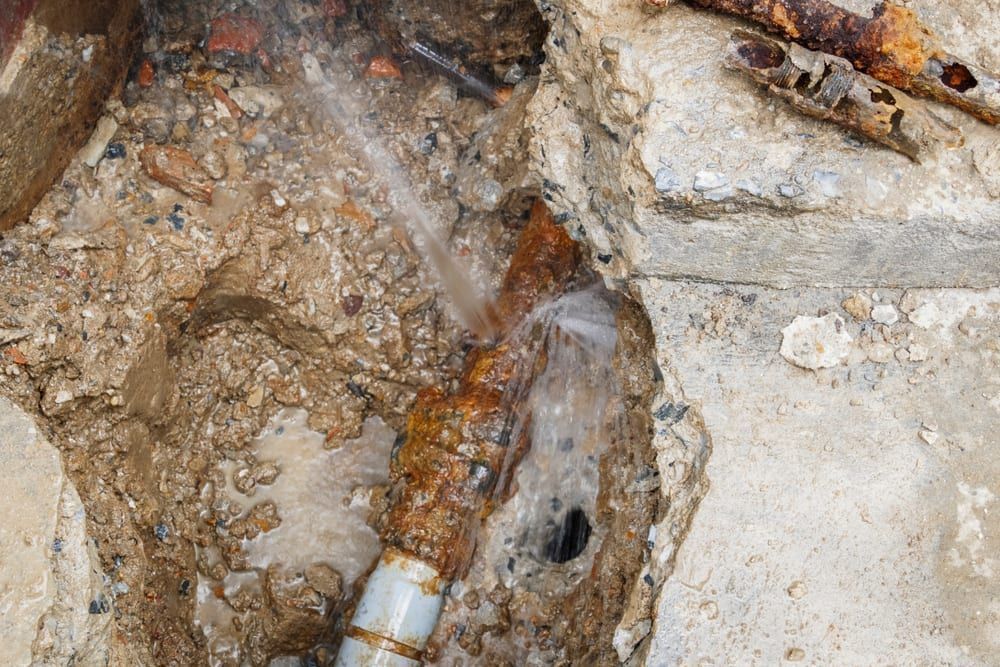
Your home's supply lines are pressurized around the clock, whether or not a fixture is open. When a line beneath the slab develops a crack, a pinhole, or a failed joint, that pressure pushes water out continuously — not just when you turn on a faucet. That's the key difference between a slab leak and almost every other plumbing noise you might notice. A dripping faucet stops when you close the valve. A running toilet quiets down once the tank fills. A slab leak keeps going because the water main behind it never turns off. That's the tell.
Concrete carries sound extremely well, and slabs act almost like a drum membrane. Water escaping under pressure creates a hiss, a whoosh, or sometimes a faint rushing sound, and the slab transmits that noise upward and outward, often making it seem louder or closer than the actual leak point. That's part of why homeowners frequently can't pinpoint where the sound is coming from just by walking around and listening — the sound travels through the concrete and framing in ways that don't match the leak's real location. It's also why guessing at a repair location without proper diagnostics tends to go wrong. The sound you hear near the hallway might actually originate under the kitchen. It happens more than you'd think.
Tip: Note the time of day the sound is loudest and whether it changes when you run water elsewhere in the house. That detail helps a technician narrow down which line is involved before they even bring out the equipment.
Signs That Confirm What You're Hearing Isn't Normal
The running-water sound rarely shows up alone for long. As a slab leak continues, you'll typically start noticing supporting evidence elsewhere in the house. A warm patch on tile or carpet in a spot with no nearby heating vent often means a hot water line is leaking beneath that section of floor. A section of flooring that stays inexplicably damp, or carpet that feels spongy near a baseboard, points to water migrating up through the slab and finding the path of least resistance. Your water meter can also confirm what your ears are telling you — if you shut off every fixture in the house and the meter's leak indicator still moves, or the numbers still climb over a ten-minute test window, water is escaping somewhere in the system.
A rising water bill without any change in your household's usage habits is another confirming sign, especially when it climbs gradually over two or three billing cycles rather than spiking all at once. Some homeowners also notice a faint musty or earthy smell near baseboards, which can mean moisture has been sitting under the flooring long enough to start affecting the subfloor or slab surface. None of these signs on their own proves a slab leak with certainty, but when you stack them next to a running-water sound with everything off, the picture becomes pretty clear.
Warning: Don't ignore a warm spot combined with the running-water sound just because there's no visible water yet. By the time moisture reaches the surface of your flooring, it's usually already been moving beneath the slab for a while, and the affected area under the floor is often larger than what shows up on top.
How Technicians Actually Confirm and Locate the Leak
Once you suspect a slab leak, the next step isn't demolition — it's diagnosis. Professional detection relies on a handful of methods, often used together, to isolate the exact leak point before anyone touches the floor.
Acoustic listening equipment is usually the starting point. A sensitive ground microphone placed at various points on the floor amplifies the sound of water escaping under pressure, and a trained technician can hear the pitch change and intensity increase as they move closer to the actual leak. This is the technology-assisted version of the same thing you've been doing by ear, just far more precise and calibrated to filter out background noise.
For leaks too small or too quiet to hear clearly — often the tiny pinhole leaks in copper lines caused by that repeated clay-soil stress — tracer gas detection fills the gap. The water is drained from the affected line and a safe, inert gas mixture is introduced instead. Because the gas escapes through even microscopic openings and rises up through the concrete far more readily than water does, a technician can sweep the floor with a gas detector and pinpoint the leak to a very small area, often within a square foot.
Thermal imaging adds another layer, particularly useful for hot water line leaks. An infrared camera can pick up the subtle temperature difference created when hot water heats the surrounding slab, showing up as a distinct warm signature on the display even when the floor feels uniform to the touch. Pressure testing rounds out the process, confirming which line is actually losing pressure and helping determine whether the fix should be a direct repair, a tunneled access point, or a full reroute of that section of pipe.
Combining these methods matters because each one covers a gap the others miss. Acoustic detection struggles with very quiet leaks. Thermal imaging only helps with temperature-differentiated water. Tracer gas needs the line to be drained first. Used together, they let a technician confirm the leak's exact location with a level of confidence that guesswork simply can't match — which is the whole point of diagnosing before any concrete gets touched.
What Happens If the Sound Gets Ignored
Water escaping continuously beneath a slab doesn't just sit there. It moves through the soil, following gravity and the path of least resistance, and over time it erodes the fine particles that give your foundation its support. Left unaddressed, that erosion can create small voids beneath sections of the slab. Once those voids form, the concrete above them loses even support, which is one of the ways slab leaks contribute to foundation settlement and cracking rather than staying a purely plumbing problem.
There's also the moisture itself to consider. Water trapped under flooring for extended periods creates conditions where mold and mildew can take hold in the subfloor, padding, or wall cavities near the leak, even if the surface flooring looks fine. And the leak itself typically doesn't stay static — a pinhole leak in a copper line under continued clay-soil stress tends to widen over time rather than seal itself, meaning the volume of water escaping generally increases the longer it goes unaddressed.
None of this means you need to panic over one night of hearing a strange sound. But a running-water noise that hangs around for more than a day or two, especially alongside any of the confirming signs above, is worth having checked instead of monitored indefinitely.
What to Do While You're Waiting for a Diagnostic Visit
If you're fairly confident you're dealing with a slab leak, there are a few reasonable steps to take before a technician arrives. Make a note of exactly where in the house the sound is loudest and whether it's constant or comes and goes — that detail speeds up the diagnostic process considerably. If the sound is loud enough that you're worried about ongoing water loss, you can shut off the main water supply to the house when you're not actively using water, though this is a judgment call based on how severe the sound seems.
Avoid the temptation to start tapping, drilling, or cutting into the flooring yourself to try to locate the leak. Without acoustic or gas detection equipment, you're guessing. Guess wrong and you've cut into flooring that has to be repaired anyway, and the actual leak is still sitting there under a different section of concrete. It's also worth resisting the urge to run water heavily through the house to "test" for a leak — if a line is already compromised, added pressure and flow only push more water into the soil beneath your foundation.
Keep an eye on your water bill and meter readings in the meantime, since those numbers can help confirm the severity of what you're dealing with and give a technician useful context when they arrive. If you notice the sound getting louder, a new warm spot appearing, or any change in water pressure at your fixtures, that's useful information too — write it down or take a quick note on your phone so you don't forget the details by the time someone comes out to look.
Frequently Asked Questions
Is it normal to hear water running under the floor occasionally?
No, this isn't normal. A running-water sound with every fixture off usually means water is escaping from a pressurized line beneath the slab, and it deserves a proper diagnostic check.
Could the sound be something other than a slab leak, like an appliance or the water heater?
Rule out ice makers, irrigation controllers, water softeners, and the water heater first, since these can create similar sounds. If everything's off and it persists, a slab leak is likely.
Why does the sound seem to come from a different spot than where the leak actually is?
Concrete transmits sound unpredictably, so a leak under one room can seem to come from another entirely. That's why technicians rely on acoustic equipment instead of guessing by ear alone.
Does this only happen to older homes?
Older homes with aging copper or galvanized pipe are more prone, but newer homes on clay soil aren't immune, since any rigid pipe beneath a slab can develop stress-related leaks.
Will the leak get worse if I wait a few more days to have it checked?
Generally, yes. A pinhole leak under continued pressure tends to enlarge rather than seal itself, and soil erosion and moisture intrusion typically continue too, so delays usually mean more damage.
Can I locate the leak myself with a stethoscope or listening device from a hardware store?
Consumer-grade listening tools can sometimes detect louder leaks but usually lack the sensitivity to find quiet pinhole leaks. Without proper equipment, you risk cutting into flooring in the wrong location.
Does the type of pipe under my slab affect how this gets diagnosed or repaired?
Yes. Copper, galvanized steel, and plastic supply lines each fail and respond quite differently, so knowing what's running beneath your slab helps determine the right diagnostic approach and repair method.
If the sound stops on its own, does that mean the leak is gone?
Not necessarily. The leak may have temporarily sealed with debris or mineral buildup, or the water simply found a quieter path. Either way, it should still be checked, not assumed.
Trusting What You Hear Beneath the Slab
That hiss under an otherwise silent house was never something to dismiss. It's a physical signal, water moving under pressure that never shuts off, through soil that never really sits still. The warm spot, the climbing water bill, the faint musty smell near a baseboard, each detail points toward the same story rather than coincidence. Recognizing that pattern early, before voids form beneath the slab or moisture settles into the subfloor, keeps a plumbing issue from turning into a foundation problem.
Confluent Solutions
has spent more than 33
years watching how Fort Worth's clay soil turns ordinary pipe wear into exactly this kind of hidden leak, and that history shapes how every diagnosis gets approached. Sound alone only tells part of the story, but acoustic, tracer gas, and thermal methods together confirm a leak's real location rather than leaving it to guesswork. A floor that's talking to you deserves that kind of attention, and getting the answer right matters more than getting it fast.